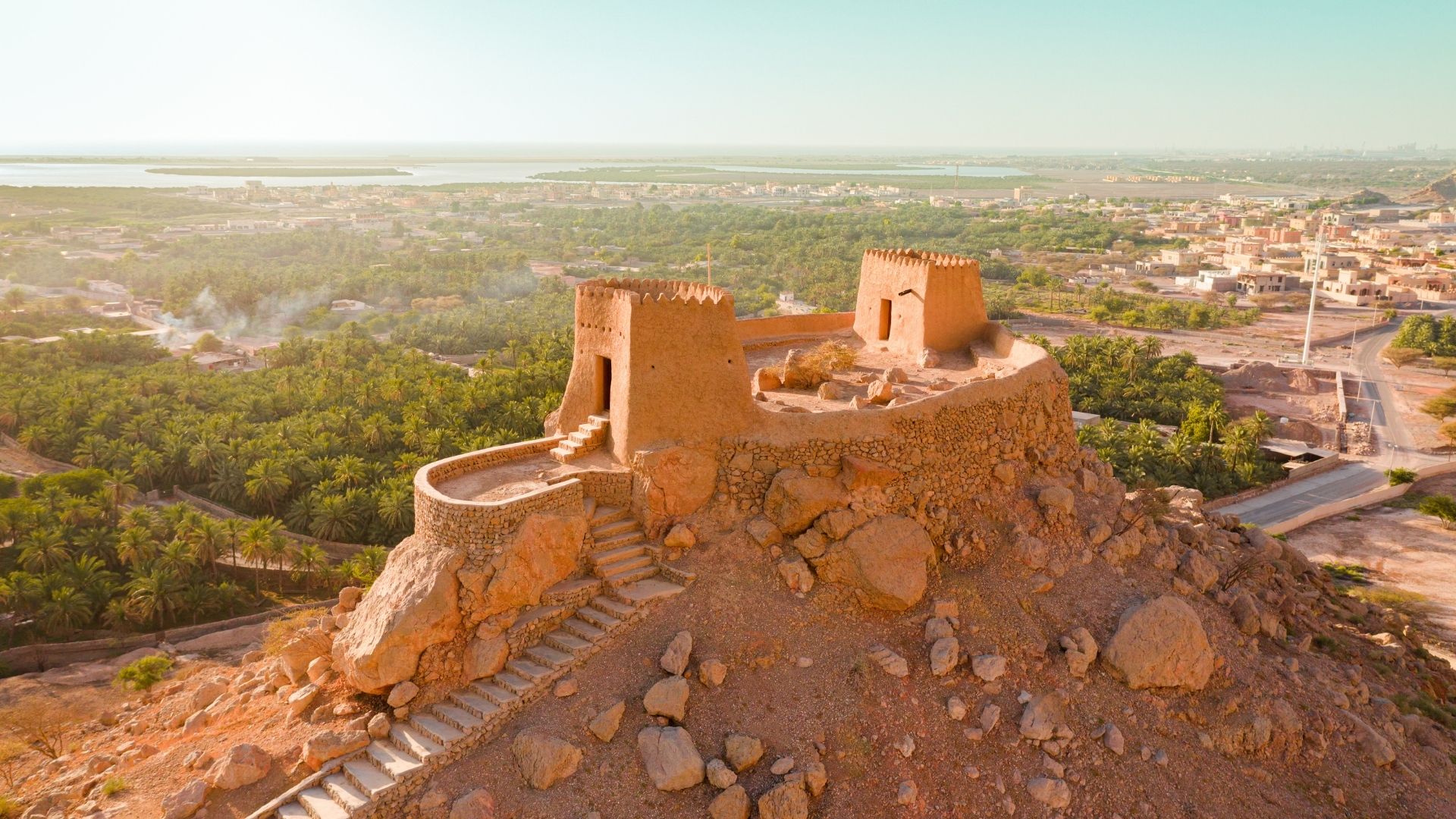
Ras Al Khaimah has a long and illustrious history, with a civilization dating back some 7,000 years to Neolithic times.
Its distinct lands, from mountain to desert to expansive coastline, have long been a lure for people seeking fertile fishing grounds by the sea or retreats to cooler palm gardens and mountains further inland.
The Emirate’s numerous ancient archaeological sites have unearthed several major discoveries.
Large ruins of external roofs and pottery from circa 5500 – 3800 BC have been found in areas around Al Jazeera Al Hamra, signifying a well-developed society trading with Mesopotamia and other civilized societies in the region.
In addition, Chinese porcelain dating from the Yuan Dynasty of the 14th century point to long-established trading ties between the two regions.
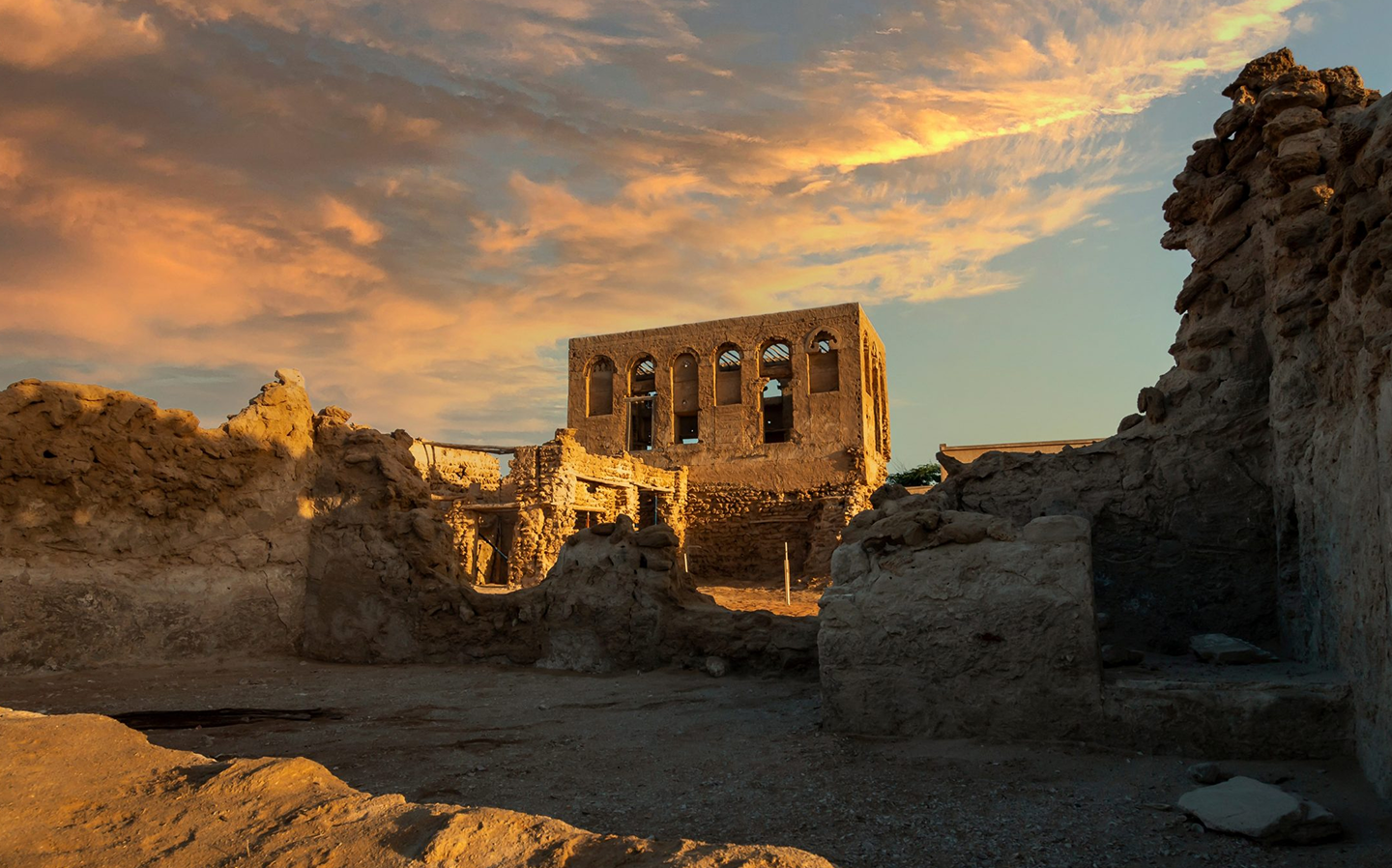
The period between the late 13th and 16th centuries saw the rise of a trading post known as Julfar, which was located in a coastal area that is now part of the territory known as Ras Al Khaimah. Julfar grew to become a powerful trading hub, with its wealth deriving from a number of sources, though its pearls were often seen as its greatest asset.
Pearl diving was a key industry in Julfar and the pearls found in the waters of the Arabian Gulf were often described as the finest available. In 1580, the Venetian jeweler and merchant Gasparo Balbi wrote that the best pearls in the world were to be found in Julfar, while the Portuguese explorer Pedro Teixeira talked of a fleet of 50 boats setting sail for Julfar’s pearl banks every year.
Julfar was also the birthplace of the renowned 15th century maritime navigator and cartographer Ahmed bin Majid, who was known as the Lion of the Sea. He provided the world with numerous maps and texts on navigation in the Middle East, India, East Africa and beyond.
The more recent past saw the rise to power of the Qawasim tribe, with the first recorded mention of them in 1624 and clear evidence that the tribe ruled lands around Ras Al Khaimah in the first half of the 18th century.
The Qawasim (plural for Al Qasimi), were great seafarers and soon controlled ports all around the Arabian Gulf.
Their battles with the British in the early 19th century have formed the basis of legendary historic tales and, ultimately, led to the formation of the General Maritime Treaty in 1820, which was the first of several treaties with the British until the formation of the UAE in 1971.
The Qawasim’s rule continues until today in both Ras Al Khaimah and Sharjah and His Highness Sheikh Saud bin Saqr Al Qasimi, UAE Supreme Council Member and Ruler of Ras Al Khaimah, plays a leading role in the archaeological work under way in Ras Al Khaimah, on several occasions hosting international archaeologists working with the Emirate’s Department of Antiquities and Museums.
For a more detailed insight into the history of Ras Al Khaimah and how its traditions and culture live on to the present day, visit rakheritage.rak.ae.